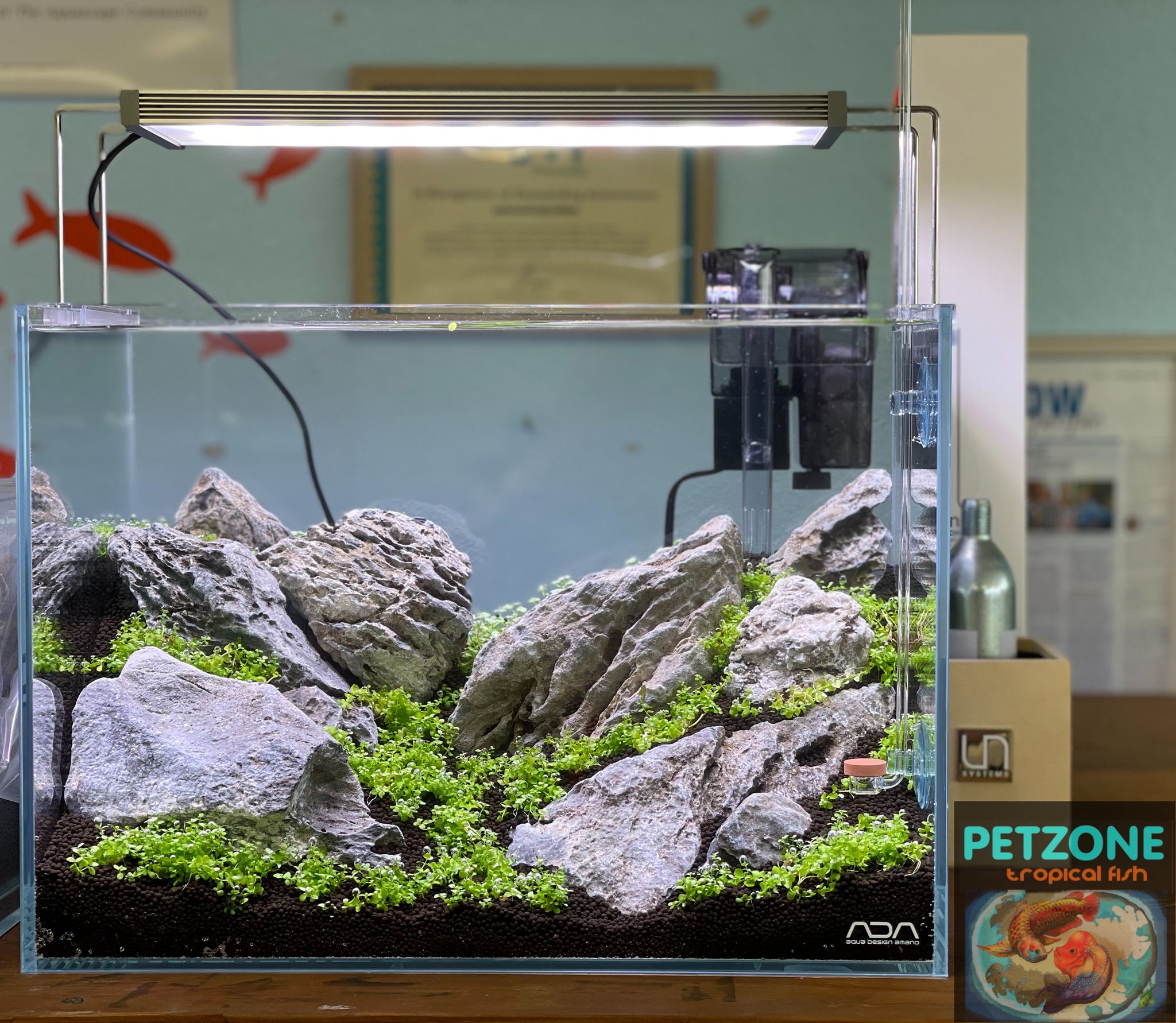
"Cloudy" covers several completely different problems that happen to look similar at a glance. A white haze, a green tint, a brown tint, and a greasy film on the surface each have a different cause, and treating one like another wastes time and money — dosing an algaecide into a bacterial bloom does nothing, and waiting out a filter-bypass film doesn't fix the filter. The color and texture of the cloudiness is the diagnostic clue, so start there before you touch anything.
If your tank is brand new and still cycling, read this alongside how to cycle a freshwater aquarium — a lot of what shows up as "cloudy" in week one or two is a normal, temporary part of that process.
Identify what you're actually looking at
| Looks like | Usually means | Typical fix |
|---|---|---|
| White or grey haze, whole tank uniformly cloudy | Bacterial bloom — very common in the first few weeks of a new tank | Leave it alone, keep testing ammonia/nitrite, let the filter catch up |
| Pea-soup green, can't see through the tank | Free-floating algae bloom (green water), not bacteria | Multi-day blackout or UV sterilizer — see our algae guide |
| Tea-brown or yellow tint, water still see-through | Tannins leaching from driftwood or botanicals — cosmetic, not a water problem | Cure the wood longer, or run activated carbon to pull the tint faster |
| Oily sheen, foam that won't pop, or a film on the surface | Protein/organic buildup or a thin biofilm on new decor | Surface skimming, more surface agitation, or just time for new decor |
| Brief haze right after a water change or gravel vacuum | Disturbed substrate particles or dissolved gas coming out of tap water | Wait it out — usually clears within hours |
White or milky water: a bacterial bloom
A uniform white or grey haze, most common in a tank under a few weeks old, is almost always a bacterial bloom rather than anything dangerous on its own. Food and waste release dissolved organic matter into the water, and in a tank where the filter's biofilm hasn't fully established, free-swimming heterotrophic bacteria explode in number to consume it — cloudy enough, in a bad case, to visibly fog the glass. Tiny organisms called infusoria then feed on that bacteria and can add to the haze further (AquariumScience.org, Cloudy Water in the Aquarium).
The same source traces most lingering bacterial-bloom cases back to one thing: not enough established bacterial surface area in the filter yet. Common contributors include a filter cartridge that was just replaced, a filter under about three months old, low-surface-area filter media, overfeeding or a dumped-in handful of food, medication that killed off part of the bacteria colony, and substrate coarse enough to trap food instead of letting it get eaten or removed. The fix for a new-tank bloom is mostly patience: don't scrub or swap the filter media, keep ammonia under control with water changes if you're fish-in cycling, and let the colony finish establishing — most blooms clear within a few days to two weeks on their own. Our cycling guide covers testing through that window so "wait it out" isn't a guess.
What doesn't reliably help: frequent filter cleaning or swapping cartridges (it removes the bacteria you're trying to grow), and polishing media or pads that catch fine particles — they clear water fast but need cleaning or replacing every few days and don't touch the underlying cause. A UV sterilizer will clear a bloom, often overnight, but it's treating the symptom, not the filter maturity behind it (AquariumScience.org, Cloudy Water in the Aquarium). Our filter guide covers filter types and the right way to clean or swap media without triggering this in the first place.
Green-tinted water is algae, not bacteria
If the tank has turned visibly green rather than white or grey, and you genuinely can't see through it, that's a different problem: a green-water algae bloom, driven by light and dissolved nutrients rather than bacteria. It doesn't resolve the way a bacterial bloom does, and it usually needs a multi-day blackout or a UV sterilizer to actually clear. Our algae guide covers green water specifically, along with the rest of the algae types that get confused with "cloudy" — diatoms, black beard algae, and cyanobacteria all look different from a bacterial bloom once you know what to compare them to.
Brown or yellow water: tannins, not a water-quality problem
Water that's tinted tea-brown or straw-yellow but still clear enough to see through top to bottom isn't cloudy at all — it's tannins, compounds that leach out of driftwood and some botanicals. They tint the water and soften it slightly, and they're not harmful to fish or shrimp; some keepers add them on purpose for a blackwater look or because a handful of species come from naturally tannin-stained habitats (Fluval, Driftwood FAQ).
If you'd rather have clear water, curing the wood longer before (or after) adding it reduces how much it releases — our driftwood and rocks prep guide covers the soak-and-change routine. Activated carbon in the filter pulls existing tannins out faster than water changes alone, though the tint usually returns gradually as long as the wood is still in the tank. Neither tannins nor the carbon used to remove them affects the nitrogen cycle, so this one is cosmetic from start to finish.
Foam, film, or an oily sheen on the surface
A thin film, persistent foam that doesn't pop, or an oily-looking sheen sitting on top of the water has a couple of common and mostly harmless causes. New driftwood and decor develop a biofilm almost immediately — their rough surface is an easy place for microorganisms to settle, and the slightly acidic water tannins create helps that growth along. It's normal, and several plecos, shrimp, and snails graze it as real food rather than tolerating it (Aquatic Arts, Natural Biofilm Promoters). That source does flag one exception worth testing for: an unusually thick, fast-returning biofilm can point to poor water quality underneath it, so don't dismiss it automatically if it keeps coming back heavier each time you wipe it away.
A protein or organic film that sits across the whole surface rather than on one piece of decor is more often a sign of dissolved organic buildup — overfeeding, insufficient surface agitation, or a filter that isn't turning the surface over enough to break the film apart. Running an airstone, pointing a filter return across the surface, or adding a simple surface skimmer usually clears it within a day or two. It's worth confirming you're not overfeeding at the same time, since that's the most common root cause behind a film that keeps coming back.
Cloudy right after a water change or gravel vacuum
A brief haze immediately after a water change, filter clean, or substrate disturbance is usually nothing to chase. Gravel vacuuming stirs up fine detritus that was sitting undisturbed in the substrate, and it settles or gets pulled out by the filter within a few hours. Fresh tap water can also look faintly cloudy from dissolved gas coming out of solution as it warms to tank temperature, which clears on its own, typically overnight. If haze from a water change hasn't cleared within a day or two, or keeps happening on the same schedule every time you change water, that's worth testing for rather than continuing to assume it's temporary.
Test before you treat. A new-tank white haze with rising ammonia needs a different response than the same haze with ammonia at zero — and from the glass, they look identical. See our water parameters guide for what to test and how often.
What makes cloudy water worse, not better
- Reaching for a clarifier or flocculant first. These make particles clump and settle, which clears the look of the water fast, but they don't touch whatever is actually feeding a bloom or algae. Expect the cloudiness back within days if the underlying cause wasn't addressed.
- Scrubbing or swapping filter media during a bacterial bloom. This is the opposite of what a maturing filter needs — it removes the bacteria you're trying to establish and can restart the bloom from scratch. Rinse media gently, in old tank water, only when flow visibly slows.
- Panic water changes during a new-tank bloom. A reasonable partial change if ammonia or nitrite is actually elevated is fine; repeated large changes "just because the water looks bad" slows down the bacteria colony's progress without fixing anything faster.
- Treating brown tannin water like a contamination. Dosing clarifiers or doing emergency water changes for cosmetic tannin tint is unnecessary; carbon or patience is all it needs.
- Misreading green water as a filter problem. No amount of filter maintenance fixes an algae-driven green-water bloom — it needs light and nutrient changes, same as the rest of the algae types in our algae guide.
When to actually worry
A white haze in a tank under two months old, a brief post-water-change cloud, or a light tannin tint are all normal and not signs of a failing tank. What's worth testing immediately: cloudiness paired with fish gasping at the surface, a sudden smell, or a bloom that hasn't started clearing after two to three weeks. Those point toward an actual ammonia or nitrite problem behind the haze rather than ordinary new-tank biology, and testing — not guessing from how the water looks — is the only way to tell the two apart.
Will cloudy water clear up on its own?
Often, yes, if the cause is a new-tank bacterial bloom or temporary haze from a water change. Those typically clear within a few days to two weeks without intervention. Green algae blooms and surface foam from an overloaded filter usually need you to change something, not just wait.
Should I use a water clarifier to fix cloudy water?
Clarifiers and flocculants can make particles clump and settle faster, which clears the look of the water, but they don't fix whatever is feeding the bloom or algae. Used without also addressing the cause, the cloudiness typically returns within days.
Is it safe to keep fish in cloudy water?
A white bacterial bloom in a cycling tank is usually not dangerous by itself, but test ammonia and nitrite regardless since cloudiness and a toxic spike often happen at the same time. Cloudy water in an established tank with no clear cause is more often a reason to test first.
Why did my water turn cloudy right after I cleaned the filter?
Rinsing filter media too thoroughly, especially under tap water, kills a portion of the bacteria colony living in it. The resulting bacterial die-off and the scramble to recolonize can cloud the water for a few days, which is why filter media should only be rinsed gently in old tank water.
Why is my tank water yellow or brown but not actually cloudy?
That's tannins, not cloudiness. Driftwood and some botanicals leach tannins that tint water tea-colored while it stays clear. It's cosmetic, not a water quality problem, and fades as the wood cures or can be pulled out faster with activated carbon.
What's the difference between cloudy water and algae-green water?
Cloudy usually means a haze of bacteria or fine particles suspended in the water. Green water is a specific case: free-floating single-celled algae turning the whole tank pea-soup green, driven by light and nutrients rather than bacteria. The fix for each is different.