A freshwater aquarium needs six things in place before any fish goes in: a tank sized for where it will actually live, a filter rated above that tank's volume, a heater for anything but true coldwater species, lighting matched to whether you're keeping live plants, a substrate, and a basic liquid water-test kit. Everything else — CO2 injection, UV sterilizers, automatic feeders, dosing pumps — solves a problem you don't have yet on day one. This guide walks through each piece with real sizing numbers, so you build the list once instead of buying twice.
Tank size: bigger is more forgiving, not harder
A larger volume of water dilutes the same feeding mistake, missed water change, or temperature swing more slowly than a small one does — which is the opposite of what most beginners assume. A 5-gallon bowl and a 20-gallon tank can take the exact same overfeeding error; the bowl's ammonia spikes dangerously within hours, while the 20-gallon tank gives you a day or two of margin to catch and fix it. Something in the 20-29 gallon range is a realistic beginner starting point: large enough to stay stable, small enough to still fit on a standard stand and budget.
Water itself weighs about 8.3 lb per gallon, and substrate and decor add more on top — a filled 29-gallon tank can easily run 300+ lb. Put it on a stand rated for aquarium use, on a floor that can support it, not a piece of furniture that wasn't built for sustained weight.
Filtration: matching flow rate to tank size
Hang-on-back (HOB) and canister filters are both rated in gallons per hour (GPH). A reasonable target is a filter whose rated GPH moves roughly 4 to 6 times your tank's total volume every hour — a 20-gallon tank, for example, is comfortably served by a filter rated around 100-150 GPH. When in doubt, round up to the next model size rather than down: an oversized filter costs a little more up front, while an undersized one lets waste accumulate between water changes.
Flow isn't universally "more is better," though. Slow-water species like bettas and many bubble-nest builders do better with flow baffled or turned down, and shrimp tanks need an intake sponge or pre-filter guard so babies and adults alike can't get pulled into the impeller.
Heating: wattage, and why a separate thermometer matters
Unless you're keeping true coldwater fish like goldfish (see our goldfish vs. tropical fish guide for why the two don't mix), most community tropical fish need a stable 75-82°F. A common starting point is roughly 3-5 watts of heater power per gallon, adjusted up for a cooler room or a tank with a lot of surface area losing heat to the air.
Buy a separate thermometer even though the heater has its own dial — heater thermostats can drift off their set point over months of use, and a stuck or failed heater is one of the fastest ways to lose an entire tank. Checking that the two agree is a quick addition to the quarterly tasks in our maintenance schedule guide.
Lighting: fish-only vs. a planted tank
For a fish-only tank, lighting is mostly about being able to see your fish — any basic fixture on a 6-8 hour timer gives the tank a consistent day/night rhythm. Live plants raise the bar: what matters is PAR (Photosynthetically Active Radiation), not watts or lumens, since PAR measures the light plants can actually use at a given point in the tank. If you're planning a planted tank from the start, our beginner planted tank guide covers choosing a light plants can actually grow under without inviting algae.
Substrate and hardscape
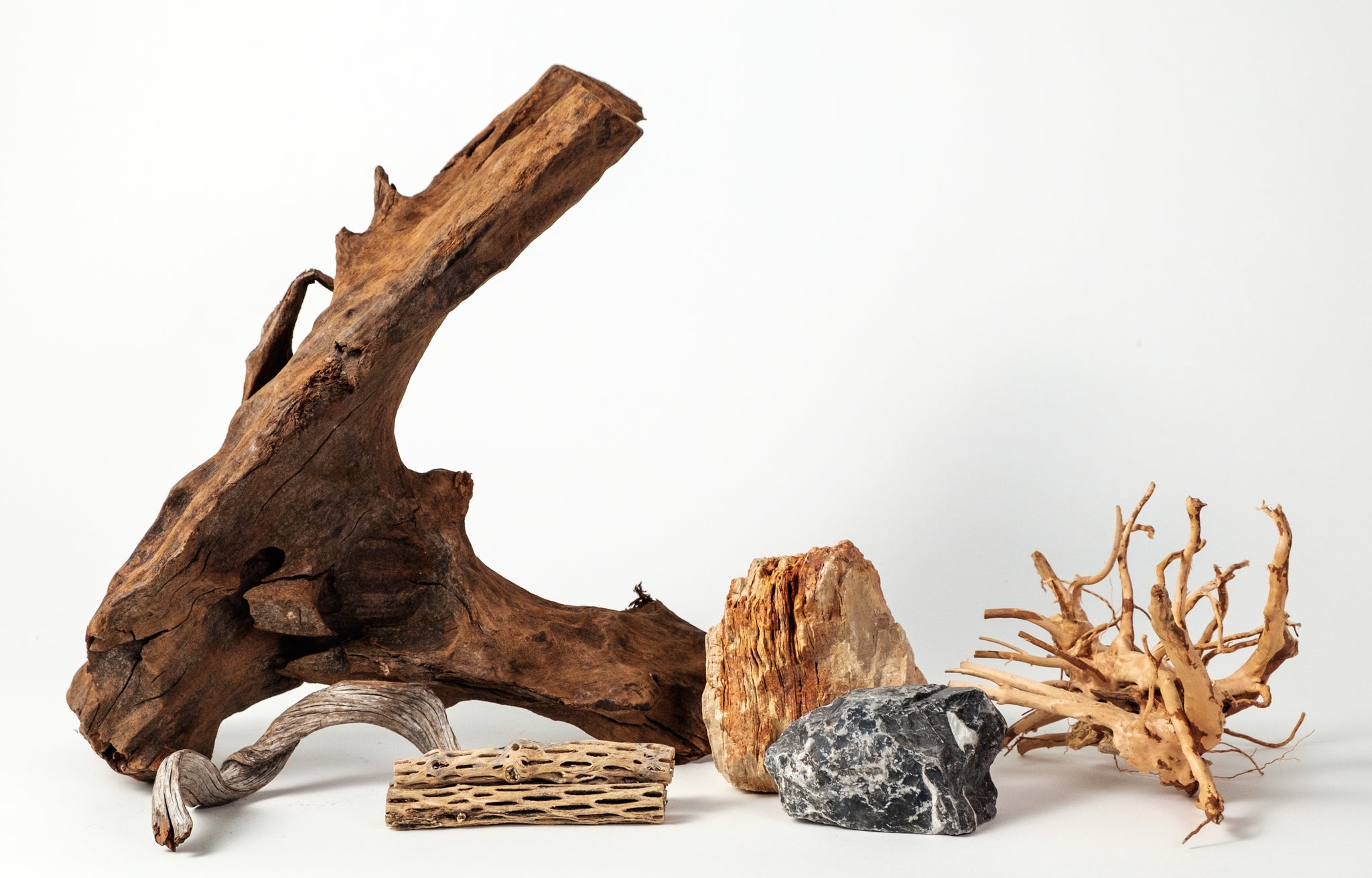
Plain inert gravel or sand is fine for a fish-only tank and gives you the most flexibility. A planted tank benefits from either a nutrient-rich aquasoil or inert substrate paired with root tabs — our planted tank guide walks through that choice. Any driftwood or rock going into the tank should be prepped first: cured until it stops leaching heavy tannins, or tested for reactivity if it's a found or unknown rock, which our driftwood and rocks prep guide covers in full.
The water-testing kit you actually need
A liquid-reagent kit covering ammonia, nitrite, nitrate, and pH is the real minimum. Test strips are faster to use but noticeably less precise for ammonia and nitrite specifically — the exact two numbers that matter most while a new tank cycles. See our water parameters and testing guide for what each reading actually means and how often to check it once the tank is established.
What to skip on day one
- CO2 injection systems — only relevant once you're running a higher-light planted tank and trying to push plant growth; see the balance-triangle section of our planted tank guide before buying one.
- UV sterilizers and protein skimmers — a UV sterilizer can help with an established algae or pathogen problem later; protein skimmers are a saltwater tool with no role in a freshwater tank.
- Automatic feeders and dosing pumps — genuinely useful for established tanks on a routine, but a solution to a consistency problem you don't have in week one.
- A second, bigger filter "just in case" — correctly sizing one filter per the GPH guidance above covers the vast majority of community setups.
The equipment checklist at a glance
| Item | Why you need it | Starting point |
|---|---|---|
| Tank | Everything else depends on its volume | 20-29 gallons for a first tank |
| Filter | Processes waste; carries the bacteria colony that does the real cleaning | Rated ~4-6x tank volume in GPH |
| Heater + thermometer | Holds a stable temperature tropical fish need | ~3-5 watts/gallon, verified against a separate thermometer |
| Light | Visibility; PAR specifically if keeping plants | Basic fixture on a timer, or a plant-rated light |
| Substrate | Anchors plants and hardscape; some types buffer water chemistry | Inert gravel/sand, or aquasoil for plants |
| Dechlorinator | Neutralizes chlorine/chloramine so tap water won't kill filter bacteria | A bottle sized to your water-change volume |
| Liquid test kit | Confirms the cycle is progressing and the tank stays safe | Ammonia, nitrite, nitrate, pH |
| Gravel vacuum / siphon | Removes water and debris together during changes | One sized to your tank |
Common setup mistakes
- Buying the smallest tank that fits the space instead of the most stable one your space and budget allow — a bigger tank is almost always easier to keep, not harder.
- Skipping a heater because "the house doesn't get that cold," then watching a tropical fish community struggle through a cold snap or an overnight dip.
- Adding fish on setup day, before the nitrogen cycle has had any time to establish — see our cycling guide for realistic timelines.
- Skipping dechlorinator on tap water, which kills the same beneficial bacteria the whole cycle depends on.
- Adding uncured driftwood or untested rock straight from a yard or trail, risking a pH swing or an unwanted mineral leaching into the water.
If you only remember one thing from this list: buy the biggest tank your space and budget comfortably allow, then size the filter to it — not the other way around. Most of the equipment mistakes above trace back to starting with too small a tank and compensating everywhere else.
What size tank should a beginner actually start with?
Something in the 20-29 gallon range, not the smallest tank you can find. Larger volumes dilute waste and temperature swings more slowly, which makes the whole first year more forgiving — a 5-gallon bowl punishes the exact same feeding or testing mistake much faster than a 20-gallon tank does.
Does my filter need to be rated for my exact tank size?
Rate it higher, not exact. Look for a filter whose rated gallons-per-hour moves roughly 4-6 times your tank's total volume each hour, then round up to the next model size rather than down — a filter that's slightly oversized is a minor cost; one that's undersized leaves waste building up between water changes.
Do I need a heater if I live somewhere warm?
Almost always, yes, unless you're keeping true coldwater species like goldfish. Most tropical community fish need a stable 75-82°F, and even a warm house swings several degrees overnight — a heater with a built-in thermostat holds that line far more reliably than ambient room temperature.
Do I need a special light if I'm not keeping live plants?
No — a basic fixture that lets you see the tank on a 6-8 hour timer is enough for a fish-only setup. A light built for plant growth (measured in PAR, not just lumens or watts) only becomes necessary once you're trying to grow something, which our planted tank guide covers in detail.
What's the minimum water-testing kit I need to buy?
A liquid-reagent kit that tests ammonia, nitrite, nitrate, and pH. Test strips are faster but noticeably less accurate for ammonia and nitrite specifically, which are the two numbers that matter most while a new tank is cycling.
Can I add fish the same day I set up a new tank?
No. A brand-new tank has no beneficial bacteria yet to process fish waste, so adding fish before cycling exposes them directly to toxic ammonia and nitrite. Our cycling guide covers how long that process realistically takes and how to do it safely.